
Last updated: 14 Nov 2026 | 102 Views |

Solar Panel Rubber Seal Strips: Reduce Water Drips, Dust and Light Through Panel Gaps
The space beneath a solar carport or solar canopy becomes more practical when rainwater is properly managed at the joints between panels. Open gaps can allow water to drip onto vehicles or walkways, create streaks of sunlight below, and let dust and fallen leaves pass through.
Solar panel rubber seal strips are designed to close the gaps between panels, helping reduce water drips, sunlight and debris passing through these joints. The seal profile must match the actual frame geometry and installed gap, while keeping the frame drainage holes and the system’s intended drainage paths clear.
What Problems Can Solar Panel Rubber Seal Strips Help Solve?
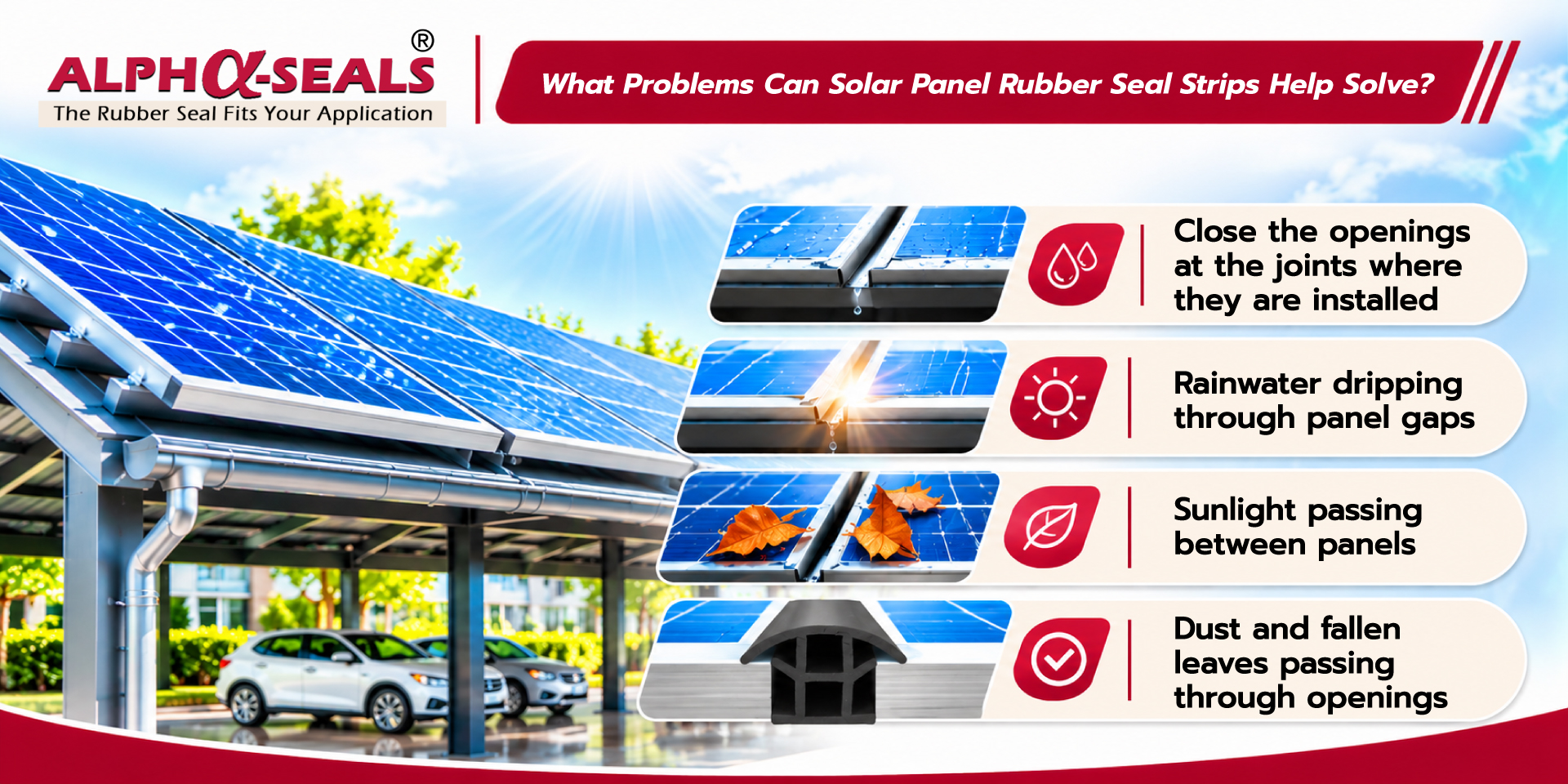
Solar panel rubber seal strips close the openings at the joints where they are installed. They can help address several specific problems:
Rainwater dripping through panel gaps: Help reduce water falling onto vehicles, walkways and usable areas directly beneath the joints.
Sunlight passing between panels: Help block streaks of light through the gaps and give the joints a more consistent appearance.
Dust and fallen leaves passing through openings: Help reduce debris falling into the area below.
Performance depends on how well the seal fits, the continuity of the sealed joints and the installation details. If a project requires the area beneath the panels to remain dry to a specified standard, water collection channels, gutters, roof edges and joints must be considered together as a complete system.
Solar panel rubber seal strips do not replace a roof waterproofing system. If water enters through fixing penetrations, existing roof joints or flashing, the source of the leak should be repaired.
Suitable Applications for Solar Panel Rubber Seal Strips
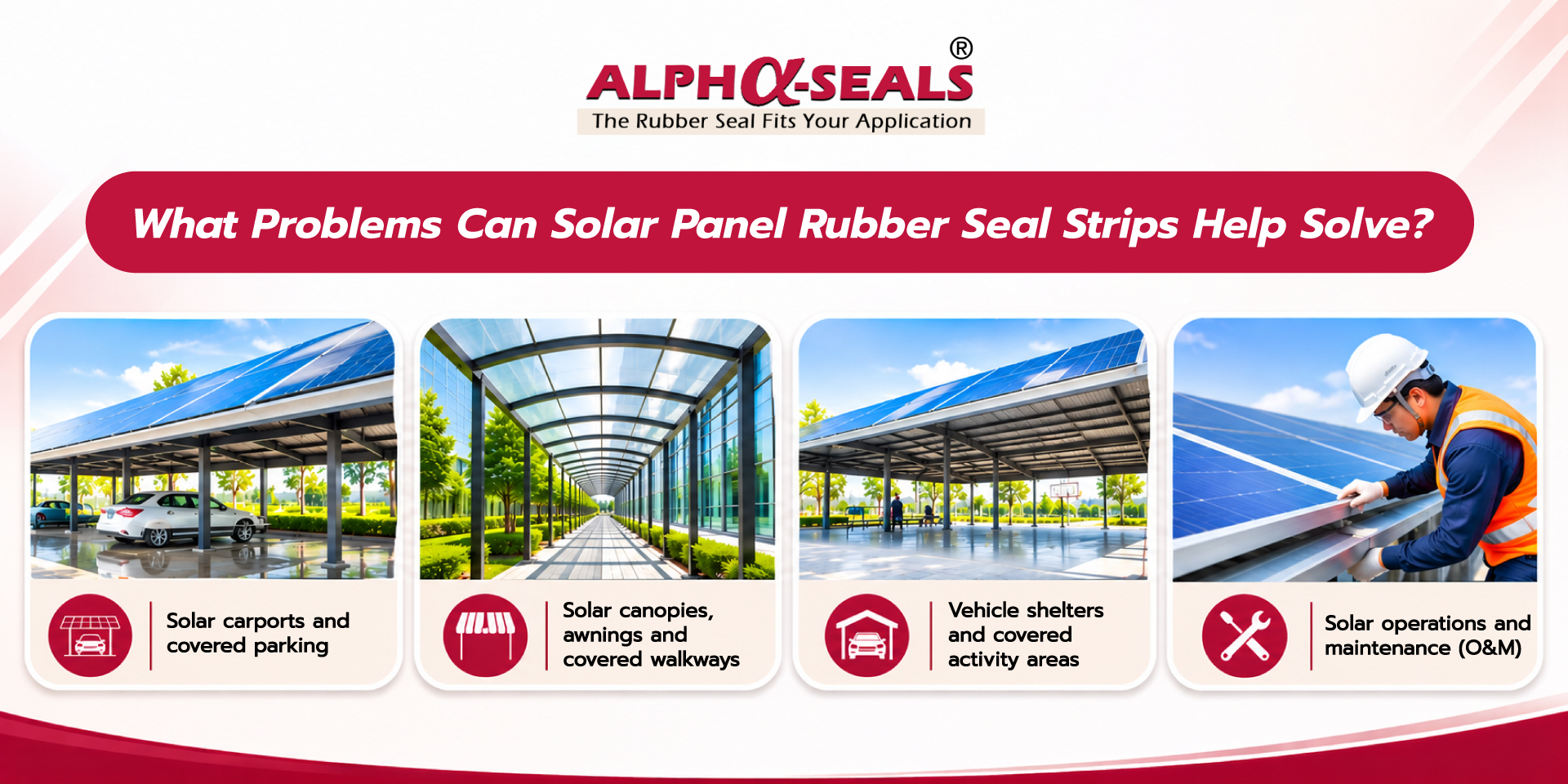
Solar carports and covered parking areas where reducing water drips through panel joints is a priority.
Solar canopies, awnings and covered walkways where sunlight and debris passing through panel gaps need to be reduced.
Vehicle shelters and covered activity areas with panel layouts and drainage systems designed for the intended use.
Solar operations and maintenance (O&M) involving the inspection and replacement of seals that have hardened, shrunk, cracked or come loose.
Choosing Solar Panel Rubber Seal Strips for the Panel Gap and Outdoor Conditions
Start with the actual gap between panels and the shape of the frames. Check where the seal will contact the frame, how much space is available for the seal stem and sealing lips, and how close the seal will sit to mounting clamps and drainage holes.
These details provide a more reliable basis for selecting the right profile than panel dimensions or rated power output in watts alone.
What Installers Should Check Before Fitting Solar Panel Rubber Seal Strips
Along with measuring the gap, review the installation location against the instructions supplied by the panel manufacturer and mounting system manufacturer. Four points require particular attention.
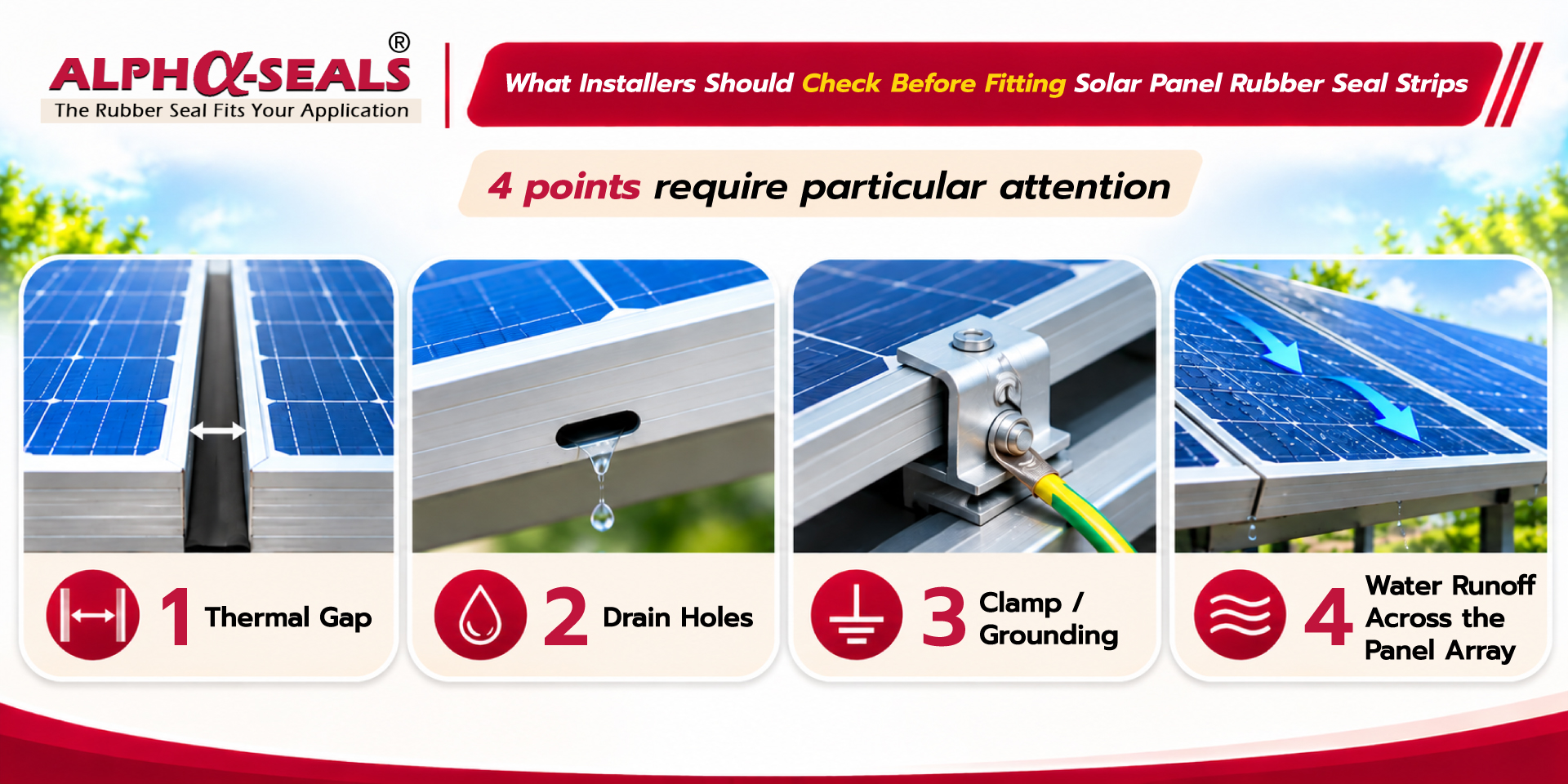
1. Panel Spacing for Thermal Expansion
Maintain the spacing specified by the manufacturer. Select a seal that will not be compressed so tightly that it pushes against the frames or restricts the panels’ thermal expansion and contraction.
2. Frame Drainage Holes
Make sure the rubber seal, any adhesive and any installation accessories do not cover or block the frame drainage holes.
3. Mounting Clamps and Electrical Bonding and Grounding
The seal must not interfere with the position or contact surfaces of the mounting clamps. It must also remain clear of the electrical contact points used for bonding and grounding.
4. Water Runoff Across the Panel Array
Check that the seal’s lips or raised sections do not obstruct water flow at the joints. Pay particular attention to joints running across the direction of runoff, seal ends and intersections between panels.
The roof slope, gutters and drainage outlets should also be considered in relation to the rainfall conditions expected at the project site.
Requirements for panel spacing, drainage holes and electrical connections should always follow the manuals for the specific panel and mounting system being used. Complete site information helps determine suitable seal dimensions and profiles, allowing the Sales Engineering team to recommend appropriate options more efficiently.
Choosing a Rubber Compound for Outdoor Use
Once the installation dimensions and constraints are understood, assess the rubber compound against the expected service conditions. Review the technical information for the selected product in the following areas:
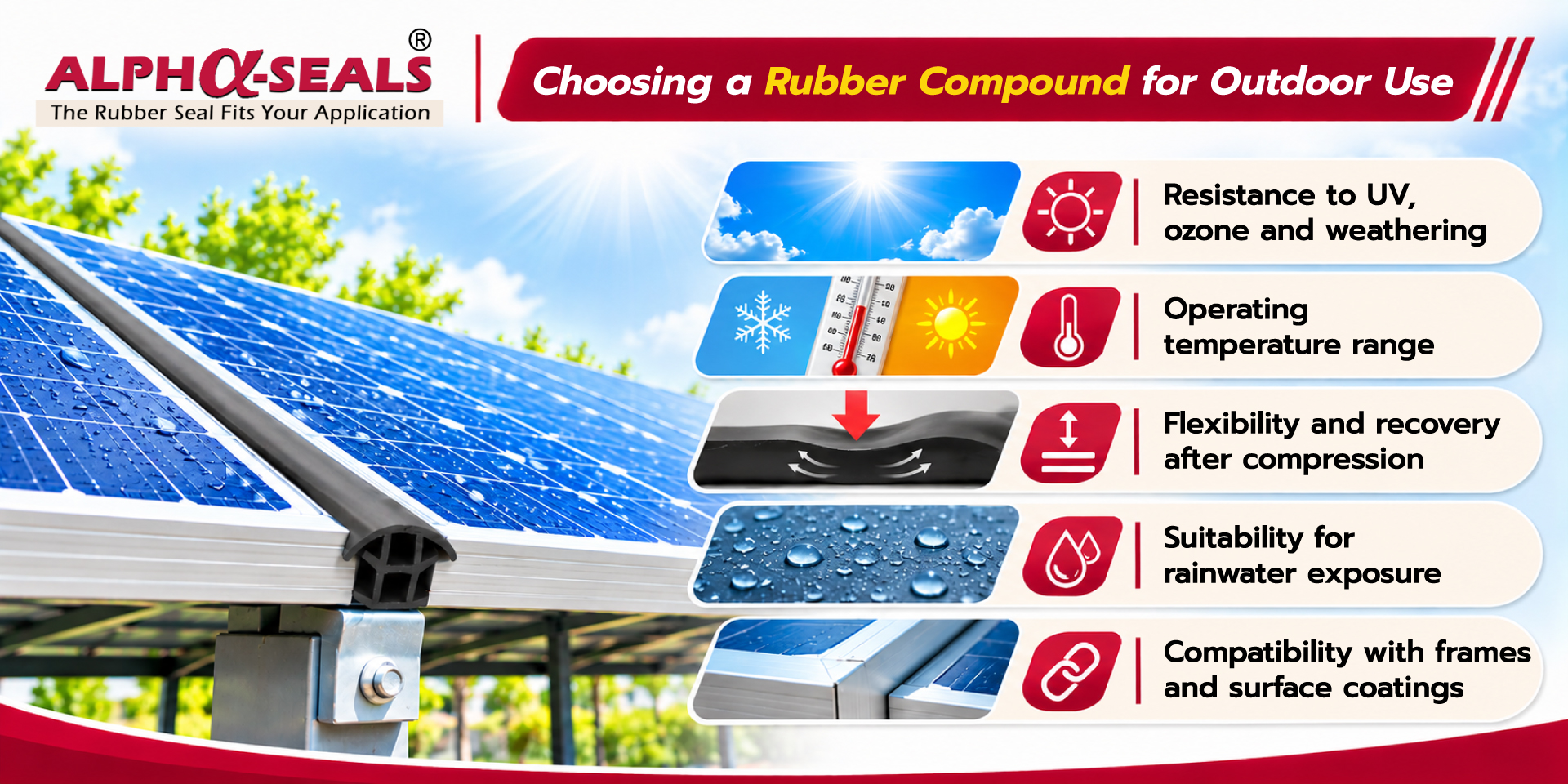
Resistance to UV, ozone and weathering: Choose a compound with supporting data for continuous outdoor exposure.
Operating temperature range: Confirm that the specified range covers the temperatures expected around the frame and seal installation location.
Flexibility and recovery after compression: Check that the material is suitable for the intended compression and the movement allowed for in the joint design.
Suitability for rainwater exposure: Review relevant water absorption data and any changes in material properties under the expected service conditions.
Compatibility with frames and surface coatings: Check compatibility with all materials the seal will contact, including adhesives or installation aids where these are required by the system.
Before placing a large order, review the profile drawing and carry out a trial fit with the actual frame. Seals that look similar may differ in stem dimensions, sealing lip thickness and hardness. A trial fit helps confirm contact, retention and clearance around drainage holes and water flow paths before installation across the full area.
AlphaSeals® Solar Panel Rubber Seal Strips: Standard Profiles and Custom Manufacturing
AlphaSeals® by PTI Global Products Company Limited offers solar panel rubber seal strips in a range of profiles, including EPDM T-profile options, for assessment against the actual panel gaps and frame designs.
Installers can submit site information to check suitable models, dimensions and current stock availability before ordering.
Explore the range: AlphaSeals® Solar Panel Rubber Seal Strips. Solar Panel Rubber Seal Strip I MOQ 500 M
For projects with an existing profile drawing or seal sample, custom manufacturing can be discussed through the following process:
Review the requirements: Check the drawing, installation gap dimensions, material requirements and operating conditions.
Approve the drawing or sample: The customer confirms the drawing or sample, depending on the project.
Manufacture and inspect: Produce the seals and complete quality checks before delivery, according to the agreed specifications.
*Products come with a one-year product warranty, subject to company terms and conditions, together with a Certificate of Analysis (C.O.A.) to support inspection and acceptance.
Enquire About Standard Solar Panel Rubber Seal Strips or Request a Quotation
To find a seal that fits your panel gaps, send site photographs, the spacing between frames and the total seal length required to our Sales Engineering team via LINE: @ptiglobal
For standard profiles or stock enquiries: Provide the installation gap dimensions, photographs of the frames and clamps, the quantity or total length required, and your planned installation date.
For custom manufacturing: Send a profile drawing, seal sample or required dimensions, together with details of the application, so the team can assess manufacturing requirements and prepare a quotation.
AlphaSeals® by PTI Global Products Company Limited
LINE Official Account: @ptiglobal
Email: info@ptigroups.com
Tel: +66 2 257 7145
Mobile / WhatsApp: +66 92 656 8846 / +66 98 253 9956


