Rubber Expansion Joint Seal for Structural Movement Control
Last updated: 14 Jan 2026 | 325 Views |

What Is a Rubber Expansion Joint Seal?
A Structural Joint Sealing Solution That Controls Construction Risk from the Smallest Point
In large-scale construction projects—such as roads, bridges, buildings, parking structures, and high-value concrete infrastructure—there is one critical element that engineers, contractors, and procurement teams cannot afford to overlook:
the structural expansion joint.
Expansion joints are the areas where structures experience continuous movement caused by:
Temperature expansion and contraction
Vibration
Repeated compressive loads from real-world use
If an inappropriate sealing material is selected, the damage may not occur immediately. Instead, it accumulates gradually, eventually turning into uncontrolled maintenance costs, structural deterioration, and shortened service life.
What Is a Rubber Expansion Joint Seal?
A Rubber Expansion Joint Seal is a specially engineered rubber sealing system designed to bridge and seal structural joints between surfaces that experience relative movement, such as:
Between two adjacent concrete slabs
Between road surfaces and bridge structures
Between concrete walls and building floors
Primary Functions of a Rubber Expansion Joint Seal
Accommodates expansion at high temperatures
Accommodates contraction at low temperatures
Absorbs compressive loads and vibration from heavy usage
Seals joint gaps to prevent water, dust, and debris ingress
The result:
The structure can move safely and naturally—without cracking, leaking, or long-term damage.
Why Rubber Expansion Joint Seals Are Critical for Construction Projects
In reality, concrete is never static.
- Hot daytime temperatures → expansion
- Cooler nights → contraction
- Repeated truck traffic → continuous compressive stress
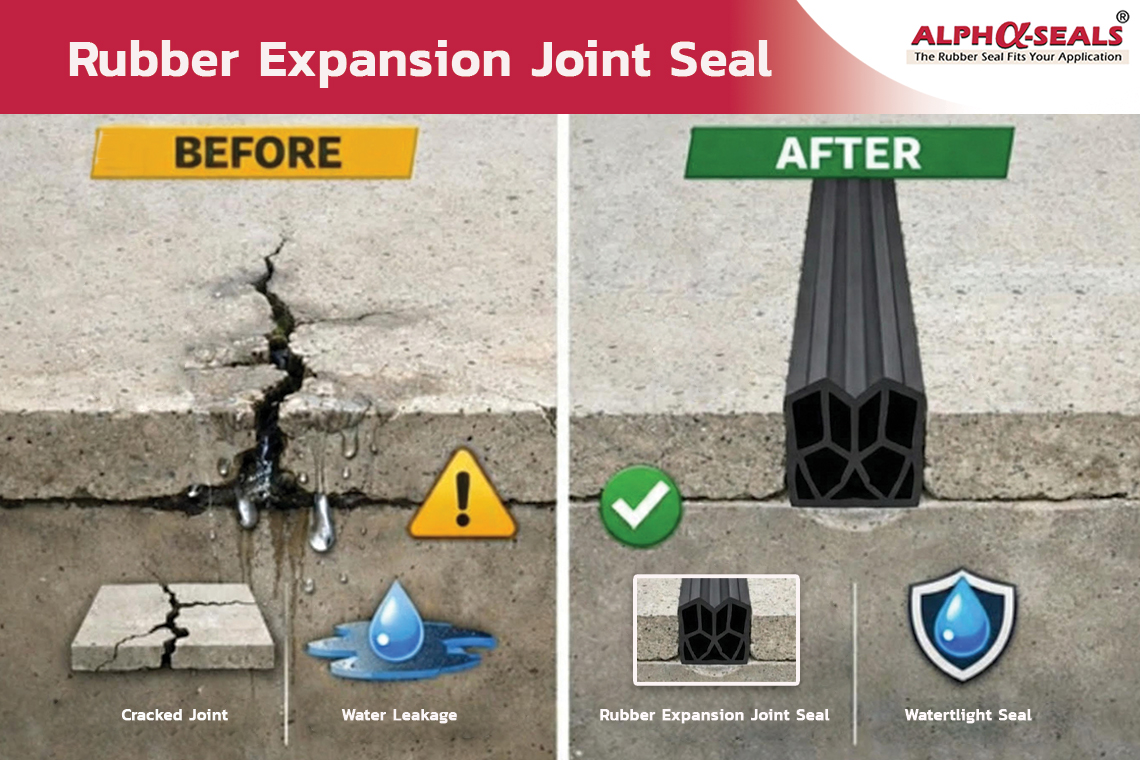
Without a flexible and durable expansion joint seal, common problems include:
- Progressive cracking
- Water penetration beneath the structure
- Corrosion of reinforcement steel
- Reduced project service life
A Rubber Expansion Joint Seal does more than simply close a gap—it controls structural movement and significantly reduces long-term cracking and failure risk.
Applications of Rubber Expansion Joint Seals
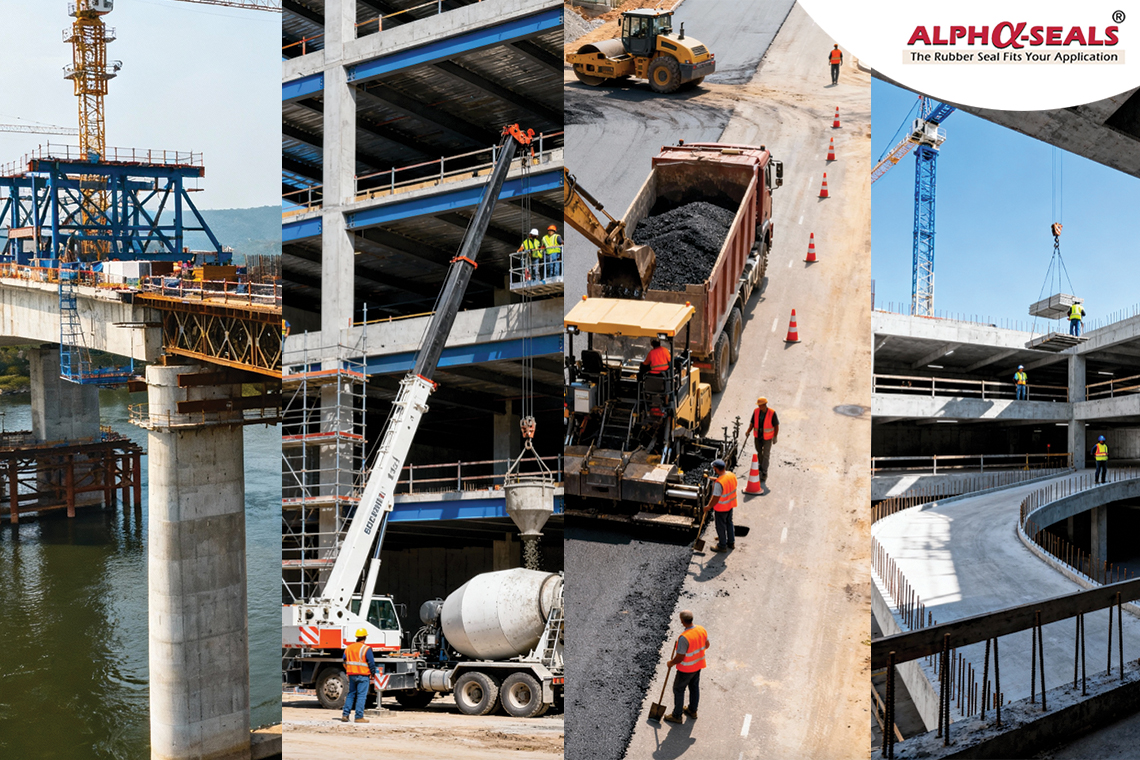
Rubber Expansion Joint Seals are widely used in:
- Small and large bridges
- Roads and highway bridges
- Parking garages
- Buildings and large concrete structures
- Service ramps and concrete walls
Any location where structural movement occurs requires an expansion joint seal engineered specifically for that application.
Key Features of Expansion Joint Seals
- Excellent UV resistance (no cracking or embrittlement)
- Resistance to high and low temperatures
- Weather resistance (rain, sunlight, humidity)
- High tensile and compressive strength
- Long service life, reducing repeated maintenance
- Effective waterproof sealing performance
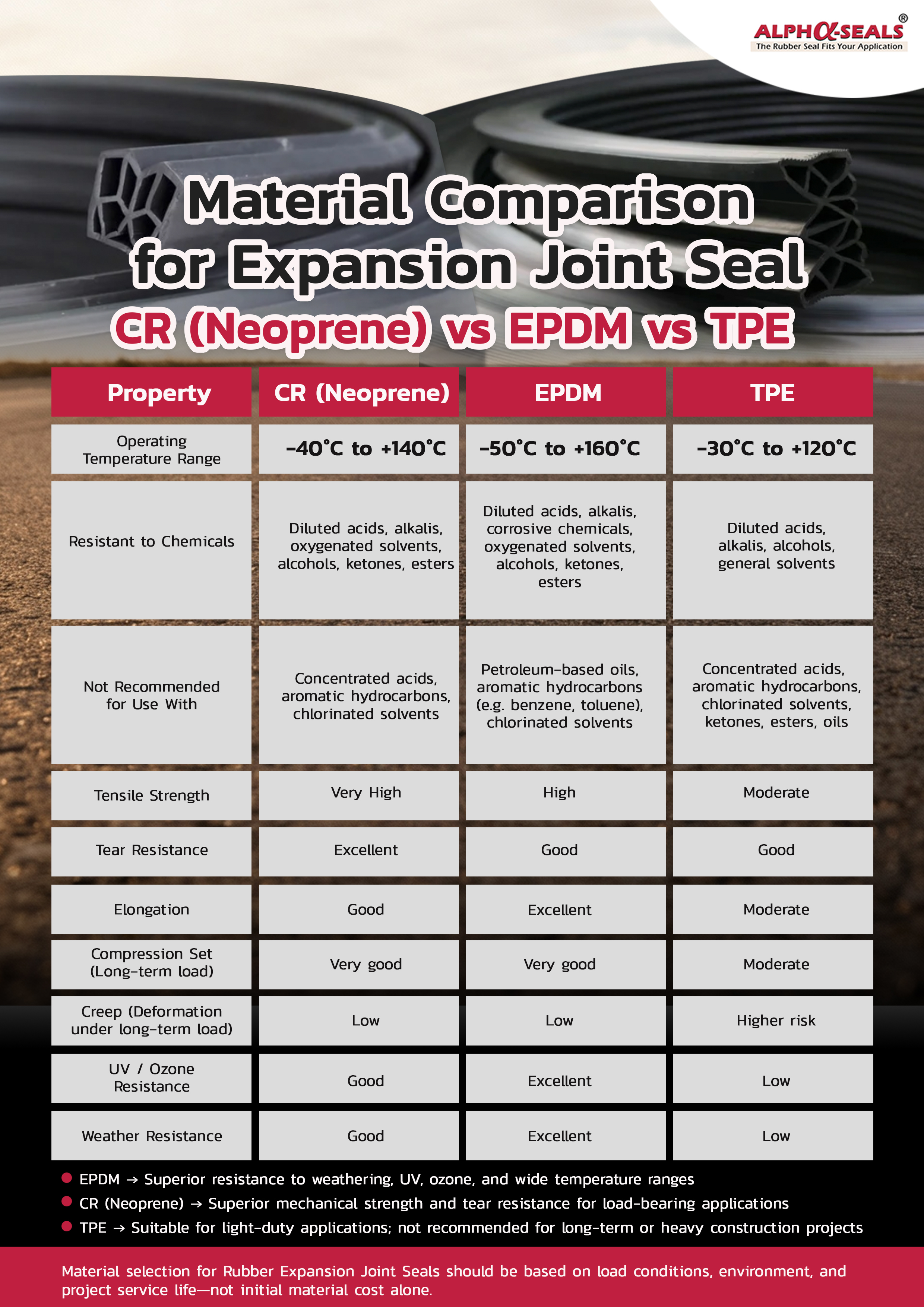
Rubber Materials Used in Expansion Joint Seals
Wrong Choice = Structural Risk | Right Choice = Project Cost Control
The performance of a Rubber Expansion Joint Seal depends not only on its profile design but also on:
- Rubber material type
- Compound formulation, matched to the application environment
Each joint location experiences different:
- Load intensity
- Movement amplitude
- Environmental exposure
Selecting the correct rubber material and compound from the beginning:
- Reduces recurring repairs
- Prevents structural damage
- Controls Total Cost of Ownership (TCO) over the project lifecycle
Cross-Section Installation Structure
A professional Rubber Expansion Joint Seal installation typically consists of:
- Two concrete substrates
- A designed movement gap
- A securely embedded rubber seal
- Proper edge anchoring or sealing
A correctly designed cross-section:
Maximizes load-bearing performance
Reduces tearing and premature failure
Extends overall structural service life
A Rubber Expansion Joint Seal is not an unnecessary expense.
It is a critical risk management tool for the entire construction project.
Correct specification from the beginning helps to:
Reduce cracking and water leakage
Lower long-term maintenance costs
Enhance structural reliability and service life
Choosing correctly from the start is far more cost-effective than repeated repairs later.
For technical consultation and project-specific specifications
TEL: 02-257-7145
LINE OA: @PTIGLOBAL
EMAIL: info@ptigroups.com
Frequently Asked Questions (FAQ)
Q1: How is an Expansion Joint Seal different from general rubber seals?
A: Expansion Joint Seals are specifically engineered to accommodate structural movement and repeated loads. General rubber seals are not designed for continuous movement, making them prone to cracking and leakage over time.
Q2: Which rubber material is recommended for road and bridge projects?
A: CR (Neoprene Rubber) or custom-engineered compounds are recommended due to their excellent load resistance, weather durability, and suitability for continuous outdoor use.
Q3: Can Expansion Joint Seals provide reliable waterproofing?
A: Yes. When the correct rubber compound, profile size, and installation method are used, Expansion Joint Seals function as effective waterproof barriers, preventing water ingress beneath structures.
Q4: What is the typical service life of an Expansion Joint Seal?
A: Average service life is approximately 10–12 years, depending on material selection, installation quality, environment, and movement intensity.
With correct specification and installation, service life can extend to 15–25 years. Incorrect selection may reduce lifespan to only 2–5 years.
Q5: Can Expansion Joint Seals be custom-manufactured based on drawings or BOQ?
A: Yes. Expansion Joint Seals can be custom-designed in terms of size, profile, and rubber compound to meet actual site conditions and project requirements.


